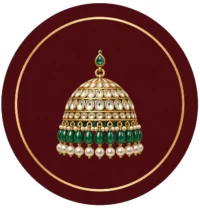
An antique nethichutti is a beautiful piece of heritage — a traditional forehead ornament worn by brides, also known as a maang tikka in the north. But buying one online is risky, because “antique” is one of the most misused words in jewellery listings. The short answer: verify an antique nethichutti by checking the craftsmanship, the materials, the seller’s proof, and the photos — and never pay for a piece you cannot return. This guide shows you exactly what to look for.
What Is a Nethichutti?
- A bridal forehead ornament: A nethichutti (also spelled nethi chutti) is worn along the hairline, with a central pendant resting on the forehead and a chain or beaded strand running back through the hair.
- Part of the bridal set: It is traditionally worn with jhumkas, a necklace set, and bangles as part of a complete bridal look, especially for South Indian and temple-style weddings — and increasingly by brides across Pakistan who love the look.
- Temple and antique finishes: Genuine antique-style nethichuttis often have a matte gold finish, temple motifs, tiny uncut stones, and handcrafted detailing rather than a shiny, machine-perfect look.
- Artificial versions are common: Most nethichuttis sold online today are artificial or gold-plated reproductions of antique designs. That is fine — as long as the seller says so honestly instead of claiming a new piece is a century old.
What “Antique” Really Means
- True antique: A piece that is genuinely old — usually decades old — with natural wear, handcrafted construction, and a history. Real antiques are rare and expensive.
- Antique-style or antique-finish: A new piece made to look old, with a matte or oxidised finish and vintage motifs. This is what most online listings actually sell, and it is a perfectly good choice for a wedding look.
- The red flag: A listing that calls a piece “100-year-old antique” while selling it at a low price with dozens in stock is almost certainly mislabelled. Real antiques are not sold in bulk.
- Ask which one it is: A trustworthy seller will tell you clearly whether a piece is a genuine antique, a vintage reproduction, or an antique-finish artificial piece. If the answer is vague, walk away.
How to Check Authenticity Before You Buy
- Look at the craftsmanship: Genuine handcrafted pieces have small irregularities — slightly uneven stone settings, hand-engraved lines, and joins you can see up close. Machine-made pieces look perfectly uniform. Ask for close-up photos of the back and the stone settings.
- Check the materials: Ask what the base metal is and what the stones are. Kundan, uncut polki-style stones, pearls, and enamel work are common in antique designs. A seller who cannot name the materials does not know their own stock.
- Look for hallmarks and stamps: Old gold pieces may carry small hallmarks, maker’s marks, or purity stamps. Their absence does not prove a piece is fake — many old pieces were never stamped — but a clear, modern-looking laser stamp on a supposedly century-old piece is suspicious.
- Study the patina: Real age leaves a soft, uneven darkening in the crevices and a gentle wear on raised edges. A uniform “antique” colour that looks painted on is usually an artificial finish, not age.
- Check the weight and feel: Antique-style pieces made with real metal and stone have a satisfying weight. Very light, hollow-feeling pieces are usually cheap alloy. If you buy on cash on delivery, you can check the weight when the parcel arrives.
- Ask for the story: Where did the piece come from? Who made it, and when? A seller of genuine antiques can usually tell you something about the piece’s origin. A seller of reproductions should at least say so honestly.
How to Vet the Seller
- Read the reviews: Look for reviews with photos from real buyers, especially for the same or similar pieces. Be wary of a shop with only five-star reviews and no photos at all.
- Check the photos: Real photos of the actual piece — from the front, back, and side — are essential. Stock photos or pictures copied from other websites are a warning sign. Ask the seller for a photo of the exact piece you will receive.
- Ask questions and judge the answers: Message the seller about the materials, the finish, and the return policy. A knowledgeable seller answers clearly and quickly. Evasive or copy-paste answers mean the seller does not know — or does not want you to know.
- Check the return policy: Never buy an “antique” piece from a seller who offers no returns or exchanges. A genuine seller stands behind what they sell.
- Prefer cash on delivery: COD lets you inspect the piece before you pay. If it does not match the listing — wrong finish, wrong stones, poor quality — you can refuse it. Avoid sellers who demand full advance payment for high-value antique claims.
- Compare across shops: If the same “rare antique” design appears in ten shops at very different prices, it is a mass-produced design, not a rare antique. Compare before you commit.
Red Flags to Watch For
- “100% original antique” with no proof: Big claims with no hallmarks, no history, and no certificate are just words.
- Prices that make no sense: A genuine antique at a throwaway price is not a bargain — it is a mislabelled reproduction.
- Blurry or stolen photos: If the seller cannot show you clear photos of the actual piece, do not buy it.
- Pressure to pay fast: “Only one left, pay now” is a sales tactic, not a fact. A real antique will still be there after you have done your checks.
- No contact details: A shop with no phone number, no address, and no clear return policy is not a shop you should trust with a high-value purchase.
FAQs
What is a nethichutti?
A traditional bridal forehead ornament — a pendant worn on the forehead with a chain running back through the hair. It is also known as a maang tikka in the north and is a key part of temple-style bridal jewellery.
How can I tell if a nethichutti is a real antique?
Check the craftsmanship for hand-made irregularities, look for hallmarks or maker’s marks, study the patina for natural uneven wear, and ask the seller for the piece’s history. A genuine antique has proof — or at least a believable story.
Is an antique-finish nethichutti worth buying?
Yes, for most brides. An antique-finish artificial nethichutti gives you the same heritage look at a fraction of the price, and it is the honest choice as long as the seller describes it accurately.
Should I buy an antique nethichutti online?
You can, if you vet the seller carefully — real photos, clear material details, good reviews, a return policy, and cash on delivery so you can inspect the piece before paying.
What should I do if the piece I receive is not as described?
Do not accept the parcel if you paid by COD, or contact the seller immediately for a return or exchange. Keep the listing screenshots and your messages as proof of what was promised.
Shop Jewellery
Find heritage-style forehead ornaments, jhumkas, and bridal sets on our Shop page, with cash on delivery across Pakistan. New to Kundan? Start with our pillar guide: Multani Jewellery: The Complete Guide.