A traditional bride’s jewellery is more than decoration — it carries family customs, blessings, and the look every Pakistani wedding photograph is built around. The short answer: a traditional bridal look centres on a Kundan necklace set, matching jhumkas, a tikka or jhoomar, a nath, and a full set of bangles, all in one matching metal tone. This guide covers each piece and how to wear it together.
The Kundan Necklace Set
- Start with the necklace: A Kundan choker or collar necklace is the centrepiece of a traditional bridal look. It sits close to the neck and frames the face.
- Add a rani haar for Barat: A longer mala or rani haar layered under the choker adds the grandeur a Barat look needs. Wear it over the dupatta, not under it.
- Keep the stones consistent: Traditional Kundan sets use uncut stones in gold-tone settings. Match the stone colour to your outfit — red and green stones suit deep reds and maroons, while white stones suit pastels.
- Check the weight before the day: A heavy bridal set looks stunning but can tire you out. Try the full set on for an hour at home before the wedding.
- One necklace or two: A choker plus a rani haar is the classic combination. Three necklaces together can look crowded, so stop at two.
Jhumkas and Earrings
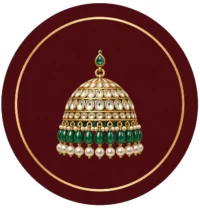
- Jhumkas are the traditional choice: Gold-tone Kundan jhumkas with pearl drops are the classic bridal earring. They suit round, oval, and heart-shaped faces.
- Match the earrings to the necklace: The earrings should echo the necklace’s stones and metal tone. A matching set always looks more polished than mixed pieces.
- Consider the weight: Bridal jhumkas are heavier than daily earrings. If they pull, use a small earring support or choose a slightly lighter pair.
- Hair up or down matters: With hair tied up, the jhumkas are fully visible and can be bolder. With hair down, keep them a little smaller so they do not tangle.
Tikka, Jhoomar, and Maang Patti
- The tikka frames the forehead: A Kundan tikka with a pearl or stone drop sits at the centre of the forehead and ties the whole bridal look together.
- A jhoomar adds old-world charm: Worn on one side of the head, a jhoomar gives a regal, traditional feel that suits a classic Barat look.
- Do not wear both heavily: A tikka and a jhoomar together can compete. Choose one as the main headpiece and keep the other very light, or skip it.
- Pin it securely: Headpieces slip during long ceremonies. Ask your stylist to pin the tikka or jhoomar firmly and carry extra pins.
- Match the metal tone: The headpiece must match the necklace and earrings in tone — all gold, or all silver. Mixed tones look accidental on a bride.
The Nath (Nose Ring)
- The nath is a bridal signature: A traditional nath, plain or with a pearl chain, is one of the most recognisable parts of a Pakistani bridal look.
- Choose the size for your face: A large nath suits a bold, traditional look, while a small nath suits a softer bridal style. Try both before deciding.
- The chain connects to the hair: A nath with a sahara chain looks complete and traditional. Make sure the chain is pinned so it does not pull.
- If you do not have a piercing: Clip-on naths look just as good in photographs and are comfortable for the whole day.
Bangles, Kangan, and Kara
- Bangles complete the bridal hands: A full set of bangles in matching colours — red, green, and gold are classic — is essential for a traditional bride.
- Mix bangles and kara: Slim bangles with one or two wide kara on each wrist give a rich, layered look without being heavy.
- Match the bangle colours to the outfit: The bangles should pick up colours from your dress and your jewellery stones, not clash with them.
- Count them evenly: Keep the same number of bangles on each wrist so the look stays balanced in photographs.
- Put them on last: Bangles go on after the dress and dupatta are set, so they do not snag the fabric.
Putting the Whole Look Together
- One metal tone throughout: Gold-tone jewellery with gold embroidery, or silver-tone with silver work. One tone keeps the look unified.
- Balance bold and simple: If the necklace is heavy, keep the earrings and headpiece a little lighter. Every piece should not shout at once.
- Match the jewellery to the dress colour: Deep red and maroon dresses suit gold Kundan with red and green stones. Pastel dresses suit lighter gold with white stones and pearls.
- Try the full look before the day: Wear everything together at least once before the wedding — dress, dupatta, jewellery, and shoes — to check comfort and balance.
- Keep a small repair kit: Extra pins, a small pair of pliers, and a soft cloth in your bag will save the day if a clasp or pin loosens.
FAQs
What jewellery does a traditional Pakistani bride need?
A Kundan necklace set, matching jhumkas, a tikka or jhoomar, a nath, and a full set of bangles. A rani haar is added for the Barat look.
Is Kundan jewellery good for a traditional bride?
Yes. Kundan is the classic choice for traditional Pakistani brides — it suits heavily embroidered dresses and looks rich in photographs.
How do I choose between a tikka and a jhoomar?
A tikka suits most brides and most face shapes. A jhoomar suits a more regal, old-world look and works best with hair styled to one side.
Should all bridal jewellery be the same colour?
The metal tone should match throughout — all gold-tone or all silver-tone. Stone colours can vary slightly, but they should pick up colours from your outfit.
Can I wear artificial jewellery as a bride?
Yes. Well-made artificial Kundan sets look identical to fine jewellery in photographs, are far lighter to wear all day, and cost much less.
Shop Traditional Bridal Jewellery
Find traditional bridal sets in our Bridal Jewellery Sets collection (https://multanikundan.com/product-category/bridal-jewellery-sets/), and browse the full range on our Shop page (https://multanikundan.com/shop/) — cash on delivery across Pakistan. New to Kundan? Start with our pillar guide: Multani Jewellery: The Complete Guide (https://multanikundan.com/multani-jewellery-the-complete-guide/).